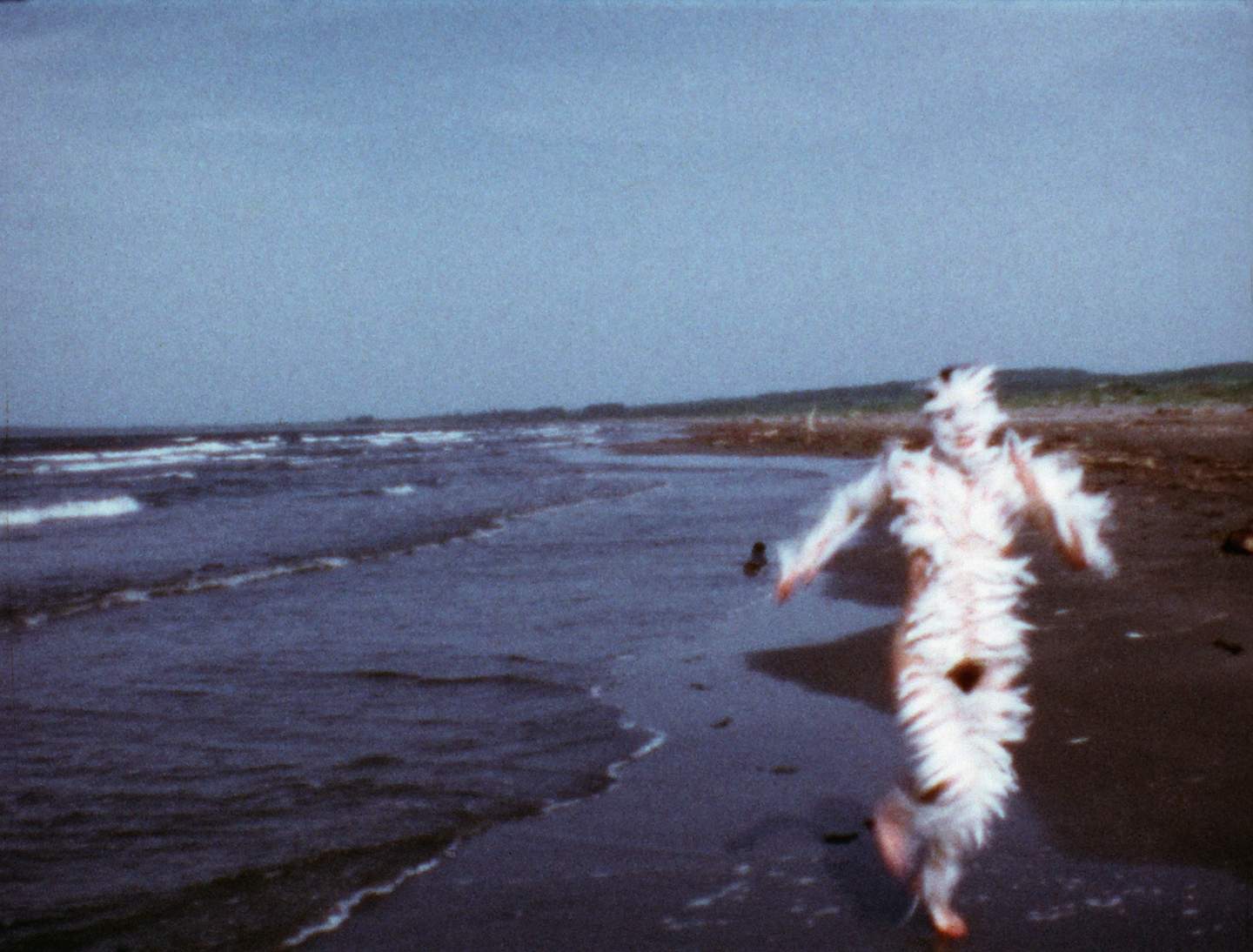
Nature has inspired artists for centuries, but Ana Mendieta wasn't interested in painting or representing it. She wanted to belong to it, to erase the boundary between herself and the natural world.
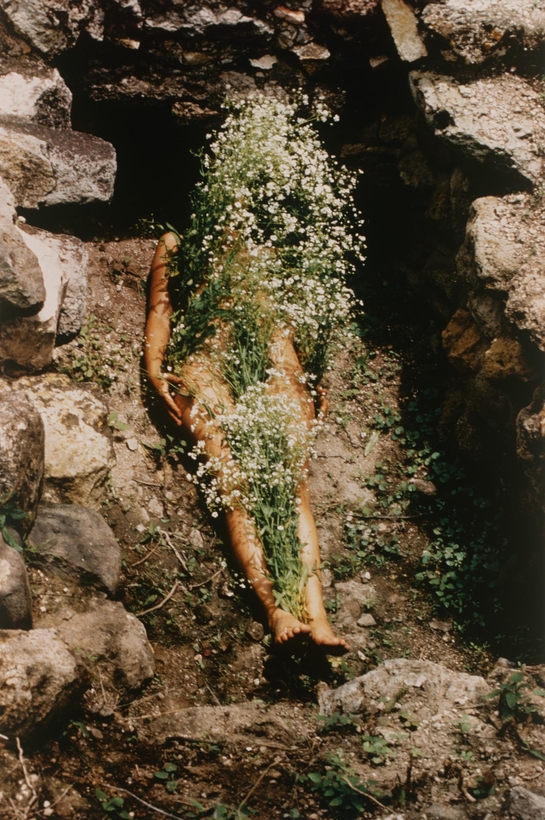
In photographs and films, she presses her body into sand, covers it with flowers, traces its outline in grass, carves its silhouette into mud or lets fire briefly illuminate the shape of a human figure before darkness returns. She isn't documenting a performance so much as testing a question: where does the body end and the landscape begin?
The Tate Modern's retrospective, bringing together more than a hundred works, reminds us that Mendieta was making land art decades before conversations about climate, identity and our relationship with nature became part of everyday cultural language.
Born in Havana in 1948, she arrived in the United States as a child through Operación Pedro Pan, after the Cuban Revolution. Exile became one of the defining experiences of her life, and it would be tempting to read every imprint she made in the earth as a metaphor for displacement.
Her famous Silueta series is among the exhibition's most powerful moments.
Her body feels present, yet is rarely visible. Sometimes it survives only as an outline in the earth; elsewhere it appears as a shape made of leaves or a hollow carved into the ground before wind, water and time quietly reclaim it.
But the artwork was never just the object. It was the encounter. Mendieta created actions that existed fully only in a particular place and for a particular moment. The camera was less a tool of documentation than a quiet witness.
To me, the exhibition feels so timely because we keep talking about reconnecting with nature as though it were another wellness habit: take a walk in the woods, hug a tree, watch the birds. Necessary, yes, but Mendieta's vision is broader. Nature is not somewhere we visit to recover from modern life. It is something we are already part of, whether we remember it or not.
Her work avoids both romanticism and environmental preaching. The earth is neither backdrop nor symbol. It is part of us.
Walking through the exhibition, I found myself thinking about our growing hunger to feel physically embedded in the natural world again.
Most artists ask us to look at what they have made. Ana Mendieta asks us to reconsider where we stand.
- Ana Mendieta, Tate Modern, Bankside, London SE1 9TG
- 15 July 2026 – 17 January 2027
- Open daily 10.00–18.00; until 21.00 Friday and Saturday
- Tickets at tate.org.uk; free for Tate Members; £5 for 16–25s via Tate Collective
- Catalogue: Ana Mendieta, ed. Valentine Umansky and Mike Wellen, hardback £40
Related events: Tate Modern Late, 25 September 2026; Like Spores, We Spread, 11–12 September 2026, including a restaging of Anima, Silueta de Cohetes (Firework Piece); Slow Looking: Ana Mendieta, 11 November 2026.