There's a particular kind of silence that falls over a room when a literary prize is announced. The breath held, the envelope opened, the name spoken aloud.
For thirty years, the Women's Prize remains literature's most quietly radical institution—and its 2026 winners prove exactly why it still matters.
Born from Frustration, Built on Conviction
The story begins, as the best ones often do, with anger. In 1991, not a single woman appeared on the Booker Prize shortlist. The omission wasn't an anomaly so much as a pattern made visible—a glaring reminder that women's writing was being read, reviewed, and rewarded at a fraction of the rate of men's.
Rather than write a strongly worded letter, a group of writers, journalists, and publishers did something more enduring. They built an institution. By 1996, the inaugural Orange Prize for Fiction (as it was then known) had launched, dedicated to celebrating excellence, originality, and accessibility in writing by women throughout the world. The critics arrived immediately. A prize 'just' for women? Wasn't that, some argued, its own form of segregation?
The objection has resurfaced in nearly every decade since—and the answer has remained the same: a prize that exists to correct an imbalance is not the cause of the imbalance.
Why the Win Still Matters
To win the Women's Prize is to step into a transformed career, but the prize's cultural weight extends beyond royalties. It legitimizes. It signals to booksellers and readers alike that here is a book worth your time. For debut and mid-career novelists especially, that signal can be career-defining—the difference between a quietly received second novel and a writer whose name becomes a fixture on the shelf.
The 2026 Winners
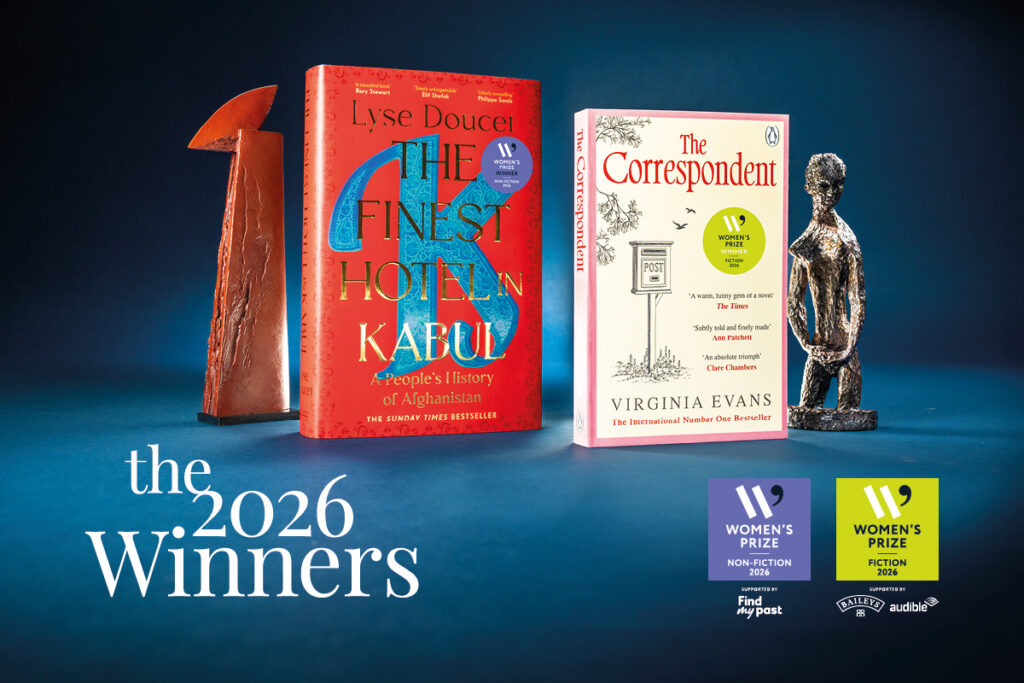
This year, the conversation crystallized around two remarkable books: The Correspondent by Virginia Evans takes the 2026 Women's Prize for Fiction—a novel that judges praised for its emotional precision and its quiet ambition.
The story centers on Sybil Van Antwerp, a 73-year-old divorced woman who chooses to communicate entirely through traditional letter writing. Through her correspondence, the novel explores profound themes of loneliness, human connection, aging, and the enduring power of the written word in a fast-paced digital age.
In nonfiction—the newer sibling of the prize, first awarded in 2024 to address an equivalent imbalance in narrative nonfiction— the winner is The Finest Hotel in Kabul by Lise Doucet. The book explores Afghanistan’s turbulent modern history through the unique lens of the iconic Inter-Continental Hotel in Kabul. By focusing on the lives of the hotel's staff, journalists, and guests, Doucet creates an intimate, deeply moving portrait of resilience and survival amidst decades of conflict.
Thirty years on, the Women's Prize remains a fascinating paradox: a literary award created to address a problem that many hoped would eventually disappear. Yet each year it continues to prove its relevance—not because women need a separate stage, but because literary culture still benefits from a broader one.
The 2026 winners could hardly make the case more eloquently. One novel celebrates the intimate, almost endangered art of letter writing; the other reconstructs the history of a nation through the lives of those who witnessed it from a single hotel. Different genres, different worlds, different voices. What unites them is precisely what the prize has championed since its inception: ambitious storytelling that expands our understanding of how people live, remember, endure, and connect.
Thirty years later, the Women's Prize is still doing what it set out to do—not narrowing the conversation, but making it larger.