The pottery wheel refuses to be rushed.
It doesn't care that you've watched twelve tutorials or that you've built a career out of optimising your time. It asks only for patience, repetition and a willingness to produce something embarrassingly mediocre before it produces anything beautiful.
Across cities, waiting lists for pottery studios stretch for months. Community choirs and amateur orchestras are flourishing. Adults are signing up for watercolour classes, birdwatching groups, and life drawing sessions. Book clubs continue to multiply despite the fact that most participants could read the same novel perfectly well on their own.
At first glance, these activities seem to have little in common beyond a vaguely analogue aesthetic. But beneath the surface they represent a quiet cultural shift.
They ask almost nothing of us except participation.
Not productivity. Not personal branding. Not optimisation.
Participation.
We've spent twenty years being encouraged to turn every interest into an identity, every identity into a brand and every brand into a business. We no longer know how to enjoy something simply because we enjoy it.
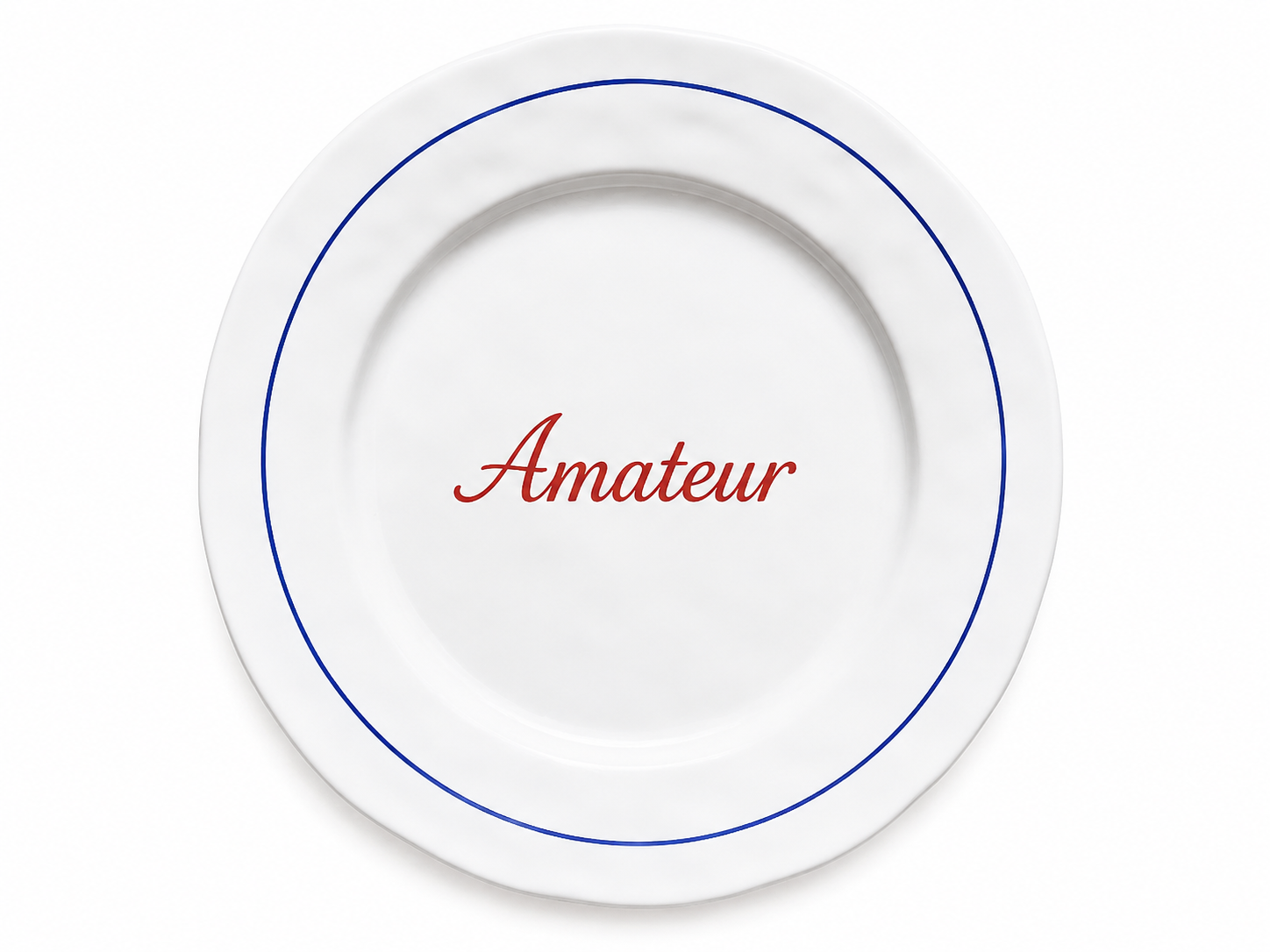
Amateur comes from the Latin amator: "one who loves."
An amateur wasn't someone incompetent. An amateur was someone motivated by affection rather than income, but somewhere along the way, we inverted the definition.
Today, "amateur" is almost always used as an insult. We apologise for amateur photography, amateur writing or amateur performances, as though the absence of payment automatically implied the absence of care.
Professionalism has expanded far beyond the workplace. Social media quietly encouraged us to professionalise nearly every corner of our lives.
Reading became a challenge.
Cooking became a side hustle.
Photography became personal branding.
Every hobby began asking the same uncomfortable question:
Could this become something bigger?
The result is that many of us have forgotten the pleasure of doing something that leads nowhere.
There is something liberating about attending a ceramics class knowing the bowl will probably collapse. About singing in a choir where nobody is trying to become the next recording artist. About filling notebooks no one else will ever read.
Failure stops being evidence that you're untalented and returns to being evidence that you're learning.
Perhaps this is why these seemingly old-fashioned hobbies feel so modern.
In a culture obsessed with expertise, beginnerhood feels almost rebellious. And in a world where every spare moment threatens to become productive, doing something simply because you love it may be one of the few remaining experiences that cannot easily be optimised.
Perhaps The Return of the Amateur is the return of doing something for love: a real act of resistance.