Every April, Milan turns into the global center of design. From 21st to 26th April 2026, the 64th edition of Salone del Mobile.Milano anchors the week at Rho Fiera, gathering more than 1,900 exhibitors from 32 different countries across the world’s most important furniture and design fair. In parallel, Fuorisalone unfolds across the city from 20–26 April 2026, transforming galleries, studios, showrooms, palazzi, and public spaces into a connected network of exhibitions and installations. The 2026 edition runs under the theme “Be the Project” — framing design as both a transformative process and a personal, evolving state of being. Salone del Mobile Milano + 3
Two Events, One Ecosystem
The relationship between Salone and Fuorisalone is symbiotic, not hierarchical. Salone is the commercial engine — its 2026 edition introduces Salone Raritas, a new platform dedicated to collectible design and fine craftsmanship, alongside the return of the EuroCucina and International Bathroom biennials. Fuorisalone, meanwhile, is the city’s open-ended counterpart: a stratified geography of districts — Brera, Tortona, 5Vie, Isola, Porta Venezia, Durini — each running its own program. What ties them together is rhythm rather than structure: a week in which architects, brands, designers, and galleries all calibrate to the same tempo. Salone del Mobile Milano
A Spontaneous Origin
What gives Fuorisalone its distinctive texture is its informal beginning. It started spontaneously early in the 1980’s thanks to the will of companies working in the furnishing and industrial design sectors, with no founder, no forefather, no institution behind it — though 1990 is generally cited as its official year of foundation. From those early gestures (Cassina opening its showroom as an extension of its fair stand; Pallucco staging exhibitions at the Mattatoio in 1988), Fuorisalone evolved into a citywide platform that now stretches well beyond furniture into fashion, art, technology, and food. The fact that it grew without a central organizer is precisely why it has remained porous to galleries, independent curators, and cross-disciplinary projects — the rhythm of the week still privileges the intimate, curated space over the trade-fair stand. FuorisaloneDOMUS
Wizard Gallery in the Design Week Conversation
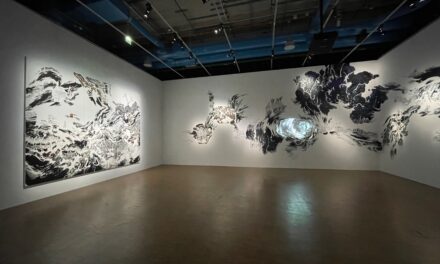
For galleries like Wizard Gallery, this week is when contemporary art and design meet on equal terms. Founded in 2005 in Milan and renamed from Federico Luger (FL Gallery) in 2020, Wizard works with more than 30 international artists with research-driven practices that explore the intersections of art, science, technology, the environment, and the living. Its two exhibition addresses anchor opposite sides of central Milan: Via Vincenzo Monti 32 in the Magenta district, and Corso di Porta Ticinese 87 on the Navigli edge — both active during Design Week. WIZARD GALLERY + 3
In 2026, the gallery is also embedded in two Design Week-adjacent projects, both designed by Garibaldi Architects:
- CYTRUS BIANCAMARIA at Viale Bianca Maria 21 — a temporary exhibition project curated by Chiara Guidi and designed by Garibaldi Architects, in which Wizard Gallery participates. WIZARD GALLERY
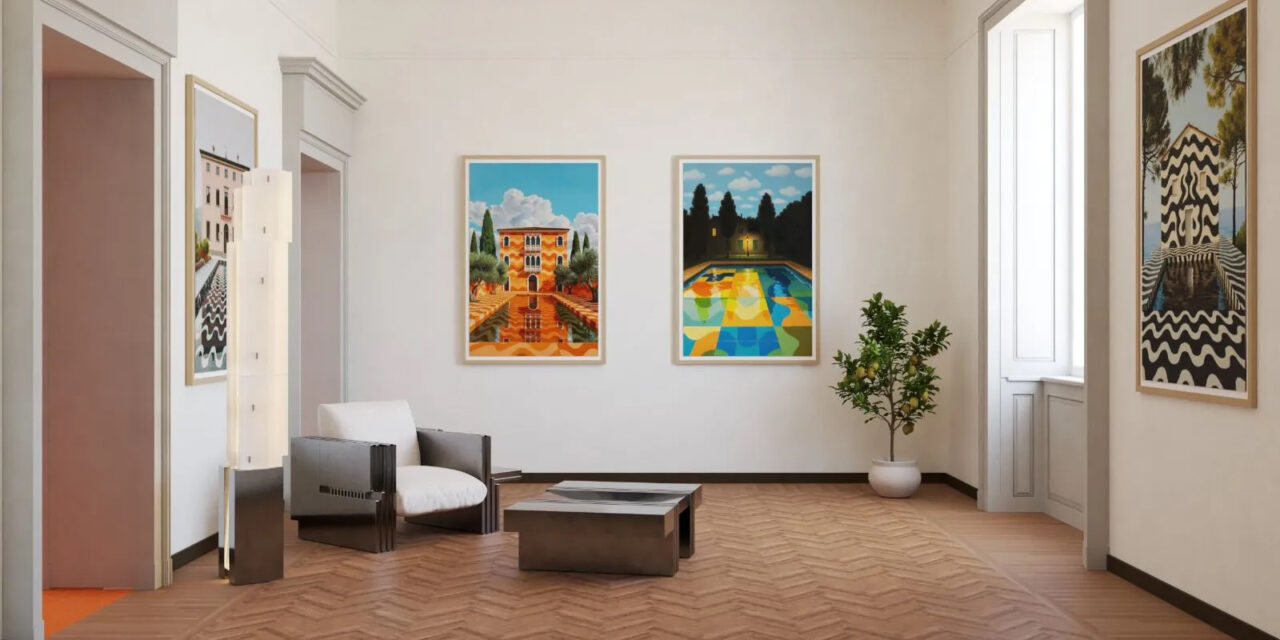
- FAY | The Collector’s House — during Milano Design Week 2026, FAY presents The Collector’s House: un modo di essere – un’idea di abitare, a site-specific installation by Garibaldi Architects that transforms the boutique into a domestic-scale stage where art objects, furniture, and architecture share the same language. WIZARD GALLERY
Both initiatives reflect what Fuorisalone has become: a platform where the boundary between design, art, fashion, and lifestyle is treated as productive rather than disciplinary.
Why Galleries Still Matter
The fairground at Rho is unmatched in scale, and the global brands command the largest installations. But what keeps Fuorisalone alive — and prevents it from becoming an extension of the trade fair — is the network of smaller, curated spaces where ideas can be tested at human scale. Galleries like Wizard offer exactly this: rooms small enough to slow a visitor down, programs careful enough to let one artist or one architectural gesture carry a whole conversation. In a week increasingly dominated by mega-installations and corporate activations, that intimacy is not a footnote. It’s the reason Fuorisalone, after four decades, still feels less like a festival than like a city briefly thinking out loud.